Cambridge Hosts Inaugural Climate & Nature Research Showcase
The University of Cambridge gathered over 250 researchers on June 26, 2026, for its first Climate & Nature Research Showcase, focusing on climate…
 By Harriet Lockwood · 26 August 2026 · 9 min read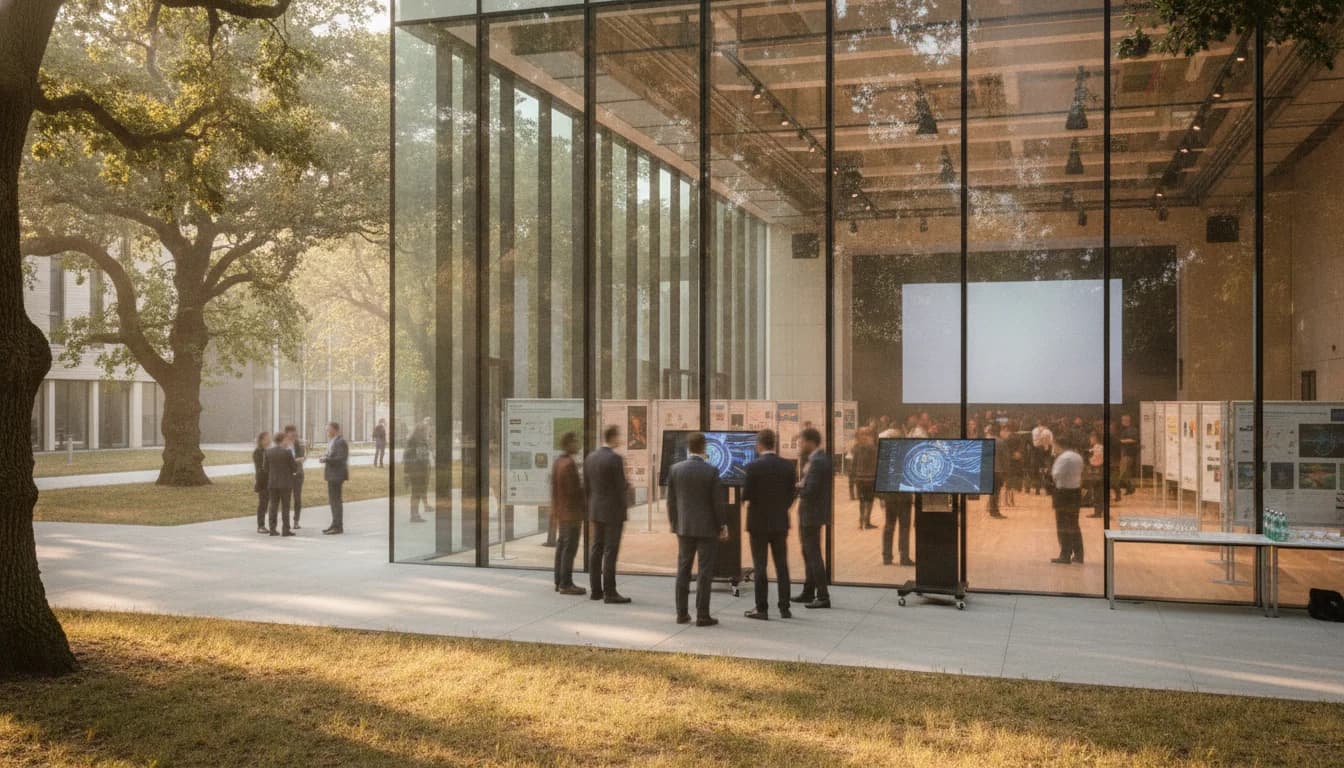
Cambridge Climate & Nature Showcase Draws 250+ Researchers
On June 26, 2026, the University of Cambridge hosted its first Cambridge Climate & Nature Research Showcase, a one-day event designed to bring together researchers from all six Cambridge Schools to highlight work at the intersection of climate change and nature conservation. The event, organized by Cambridge Zero, took place at the Ray Dolby Centre in Cavendish Laboratory, Cambridge, and featured a program that spanned plenary talks, a poster-and-exhibition hall, and interactive sessions aimed at translating academic findings into real-world impact. This opening round of coverage frames the showcase not merely as a conference moment but as a signal of Cambridge’s commitment to cross-disciplinary collaboration in climate and biodiversity research, with implications for policy dialogue, industry partnerships, and public engagement. The day’s activities ranged from high-level lectures to rapid-fire lightning talks, all intended to connect researchers with practitioners and decision-makers across sectors. The Cambridge Zero-led initiative also emphasized the role of research in informing climate and nature action at regional, national, and international scales, aligning with the broader university strategy to use science as a driver of practical solutions. The day culminated in a networking reception and a keynote lecture that underscored pathways from discovery to deployment. According to Cambridge News coverage and the Cambridge Zero event listing, these components were designed to maximize collaboration and knowledge transfer across disciplines. (cam.ac.uk)
This opening is followed by a formal lead-in that situates the showcase within Cambridge’s ongoing climate and nature initiatives and signals the event’s role in the year’s scholarly and public-facing climate agenda. The day’s agenda, attendees, and outcomes reflect a deliberate strategy to bridge research with policy influence, industry innovation, and civil society engagement. As Cambridge Zero and partner institutions frame it, the showcase is not a solitary event but part of a continuum of activity that includes public-facing talks, policy briefings, and cross-institutional networks designed to sustain momentum beyond the June gathering. The event’s structure, with concurrent talks, posters, and interactive demonstrations, was designed to accommodate multi-voice participation while preserving a clear throughline toward practical impact. The organizers highlighted that research spanning energy systems, biodiversity conservation, sustainable health, and climate-resilient infrastructure could benefit from closer collaboration—an objective that was reflected in both the content of talks and the layout of the exhibition floor. The day’s program also included a forward-looking panel discussion on how research outcomes can be translated into scalable solutions, a theme that resonated with attendees from both academia and external stakeholder communities. (cisl.cam.ac.uk)
What Happened
Event logistics and participants
The Cambridge Climate & Nature Research Showcase was scheduled as a one-day event, with docking points across multiple venues and a program designed to maximize cross-disciplinary interaction. The Ray Dolby Centre at Cavendish Laboratory served as the primary venue, providing space for keynote sessions, breakout talks, and the exhibition hall where researchers displayed posters and project stands. Cambridge Zero’s events page confirms the venue and the multi-school composition of participants, highlighting that researchers from all six Cambridge Schools were represented. The event’s organization by Cambridge Zero aligns with the university’s broader climate initiative ecosystem, which includes interdepartmental collaboration and a emphasis on translating research into practical action. (cisl.cam.ac.uk)
Estimates and accounts from university communications place attendance in the hundreds, underscoring the scale of the engagement. Cambridge News coverage of the showcase describes the event as drawing more than 250 academics, students, and professionals, which signals a substantial cross-section of the campus and beyond. The audience composition underscores broad interest in climate and nature research, spanning multiple domains from engineering and physical sciences to life sciences, social sciences, and humanities. The overnight takeaway from these accounts is that the showcase functioned as a multi-disciplinary marketplace for ideas, where researchers could learn about parallel work, identify potential collaborators, and receive visibility for emerging projects. (cam.ac.uk)
Highlights from talks and posters
A core feature of the day was a program of talks from senior researchers across the six Schools, covering energy systems, materials science, infrastructure resilience, biodiversity conservation, sustainable food systems, health in climate contexts, policy interfaces, and environmental law. The format blended traditional lectures with lightning talks, enabling rapid exposure to a wide spectrum of topics and approaches. By design, the talks highlighted both theoretical advances and practical challenges—emphasizing that climate and nature research thrives when ideas can be translated into testable experiments, pilot deployments, or policy considerations. The exhibition floor complemented the talks with posters and stands where teams demonstrated prototypes, field studies, and data-driven insights. This combination of scholarly exchange and tangible demonstrations aimed to accelerate connections between researchers and external partners, with the goal of moving from insight to impact. (cisl.cam.ac.uk)
The day also included interactive stalls and a forward-looking session focused on translating research outcomes into real-world impact. This element reflected Cambridge Zero’s mission to ensure that academic成果 contribute to climate resilience and biodiversity preservation beyond the campus. The public keynote lecture provided a capstone for the day, offering a synthesis of themes and a view toward next steps in Cambridge’s climate and nature agenda. These components—talks, posters, lightning sessions, and a keynote—together formed a comprehensive program designed to foster collaboration, showcase leadership in climate and nature research, and stimulate new lines of inquiry and partnerships. (cisl.cam.ac.uk)
Public keynote and awards
The showcase featured a public keynote and an awards component that recognized exemplary climate and nature research impact. The awards segment, described in Cambridge News reporting, highlighted projects and initiatives with tangible contributions to climate action and biodiversity outcomes. The inclusion of an awards element signifies a deliberate effort to celebrate and amplify practical achievements within the Cambridge research ecosystem, providing role models for the next generation of scholars and practitioners. The award structure and selection criteria were designed to align with Cambridge’s climate and nature research priorities, reinforcing the message that rigorous science can yield measurable benefits for policy, industry, and communities. The combination of recognition and public-facing programming contributed to the event’s broader aim of elevating climate and nature research within the university and the public discourse. (cam.ac.uk)
Why It Matters
Cross-disciplinary collaboration across six Schools
One of the most salient outcomes of the Cambridge Climate & Nature Research Showcase is the demonstration of cross-disciplinary collaboration across all six Cambridge Schools. The event’s design—bringing together researchers from diverse fields under one roof—highlights a shift toward integrative climate science and policy-oriented research. By creating spaces for dialogue among mathematicians, engineers, ecologists, social scientists, health professionals, and legal scholars, the showcase signals a strategic move to break down silos that can slow progress on climate and biodiversity challenges. This cross-pollination is particularly important for complex systems problems, where solutions require not just technical innovation but also governance, behavior change, and economic analysis. Cambridge Zero and partner units have long emphasized multidisciplinary collaboration, and the 2026 showcase provides a tangible demonstration of that principle in action. (cisl.cam.ac.uk)
Blockquote example:
It is here and we need bold action. Education is a vital part of that action. — Cambridge University speakers, quoted in Cambridge News coverage of London Climate Action Week events that referenced the Cambridge Climate & Nature Research Showcase. (cam.ac.uk)
Implications for policy and industry
The Cambridge Climate & Nature Research Showcase sits at a critical nexus of science, policy, and industry. By assembling researchers from across disciplines and exposing them to the practical concerns of policymakers and practitioners, the event helps to surface research designs that can inform climate action at scale. The convergence of high-level talks on energy transitions, sustainable infrastructure, conservation strategies, and health in a changing climate offers a rich repository of ideas for decision-makers seeking evidence-based pathways to reduce emissions, protect ecosystems, and safeguard public health. The inclusion of policy-oriented topics, as well as discussions around data and metrics for climate and nature impacts, positions Cambridge as a strategic hub for translating scientific knowledge into actionable guidance for government agencies, non-governmental organizations, and industry players. The event’s alignment with London Climate Action Week underscores its relevance to broader climate policy discussions and cross-border collaboration. (cam.ac.uk)
Public engagement and education
Beyond research-to-policy implications, the showcase reinforces Cambridge’s emphasis on education and public engagement as levers for climate and nature action. The event’s public-facing components, including a keynote and post-event networking, provide avenues for the general public and local stakeholders to engage with cutting-edge science and its real-world implications. The university and its partners have highlighted education as a central element of climate action, suggesting that dissemination and dialogue with diverse audiences are essential to building societal resilience and adoption of sustainable practices. This emphasis on outreach complements the technical focus of the research, signaling a holistic approach that values both rigorous inquiry and informed public discourse. (cam.ac.uk)
What's Next
Follow-up actions and collaboration opportunities
While specific post-event programs may be finalized through Cambridge Zero and university partners, the showcase is positioned as the kickoff for ongoing collaboration in climate and nature research. Organizers have indicated that post-event activities, reports, and subsequent forums are likely to form part of a continuing effort to translate research insights into concrete actions. The forward-looking sessions during the day emphasized mechanisms for scaling solutions, pilot projects, and partnerships with governmental bodies, industry players, and civil society organizations. Attendees can anticipate opportunities to join cross-disciplinary working groups, participate in joint grant applications, and engage in cross-institutional studies that leverage Cambridge’s diverse strengths. The event’s multi-stream format—combining talks, posters, and interactive demonstrations—creates a durable platform for sustained collaboration beyond a single date. (cisl.cam.ac.uk)
Future showcases and how readers can stay involved
Looking ahead, Cambridge Zero and its collaborators are expected to refine and repeat elements of the Cambridge Climate & Nature Research Showcase, potentially expanding the audience and the scope of topics to reflect evolving climate and biodiversity priorities. For readers seeking ongoing updates, university channels such as Cambridge Zero’s public materials and the Cambridge News ecosystem provide regular coverage of climate and nature research, policy implications, and related events. In addition, institutional pages that outline climate and nature science initiatives offer background context for readers who want to track Cambridge’s long-term trajectory in this area. These sources collectively support readers who want to stay informed about new findings, collaborations, and action-oriented outcomes stemming from Cambridge’s climate and nature research ecosystem. (zero.cam.ac.uk)
Closing
The Cambridge Climate & Nature Research Showcase marks a notable milestone in Cambridge’s approach to climate and biodiversity research: it demonstrates a ready-to-collaborate, cross-disciplinary network that can move ideas from laboratories into public policy, industry practice, and everyday life. By bringing together researchers from all six Schools, presenting a spectrum of ideas from energy systems to ecosystem restoration, and offering structured opportunities for dialogue with policymakers and practitioners, the event creates a durable platform for integrated action. As Cambridge Zero and its partners continue to translate research into impact, stakeholders across academia, government, and civil society will be watching closely for the next steps, the outcomes of collaborative projects, and the tangible benefits these efforts deliver to climate action and nature conservation.
Readers who want to follow the Cambridge Climate & Nature Research Showcase trajectory can keep an eye on Cambridge Zero’s initiatives, the university’s climate and nature pages, and related news coverage. The event’s momentum is part of a broader Cambridge commitment to climate leadership and evidence-based policy engagement, and ongoing updates are expected as researchers translate ideas into demonstrable, real-world progress. For ongoing context and related climate-and-nature research coverage, Cambridge Zero’s “Explore Cambridge Climate & Nature Research” portal and Cambridge University news coverage provide accessible entry points for researchers, policymakers, and the public alike. (zero.cam.ac.uk)